A taste for ants
Harvester ants make up much of the diet, though other small prey are eaten too. A quick tongue flick captures an ant, which is swallowed whole.
What they eat → hey, horny toad!
A LITTLE CURIOSITY. A CLOSER LOOK.
The familiar little lizard has a remarkable story of its own.
Those horns, that wide body, the way it disappears against the soil—each invites a closer look. Here’s a short introduction to the Texas horned lizard, Phrynosoma cornutum, and the science that helps us understand it.
FROM THE BOOK · A CLOSER LOOK AT SCALES
A horny toad’s scales vary across its body. These enlarged views compare scales along the middle of the back, the side of the back, and the belly.
A keel is a ridge on a scale. Some scales on the back are enlarged and pointed, while those on the underside have a more regular, diamond-shaped pattern.
From The Texas Horned Lizard. These are interpretive enlargements; the three views are not shown at the same magnification.
Open the full-size diagram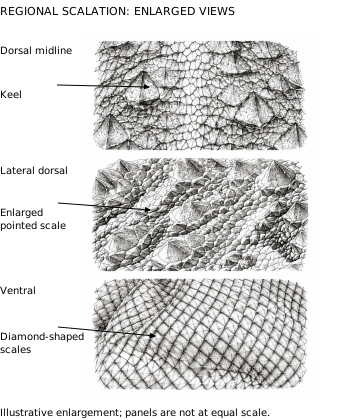
A LIFE CLOSE TO THE GROUND
Harvester ants make up much of the diet, though other small prey are eaten too. A quick tongue flick captures an ant, which is swallowed whole.
What they eat →Brown, gray, and reddish markings help these lizards blend into the ground. Open patches and loose, sandy or loamy soils provide places to move and burrow.
Where they live →Camouflage and stillness help conceal a horny toad. It can also direct blood from around its eyes toward a predator—a defense known to repel some mammals, including coyotes.
Enemies & threats →WHY UNDERSTANDING MATTERS
The Texas horned lizard is listed as threatened in Texas. Understanding its food, habitat, and behavior helps explain what this animal needs—and why conserving it takes more than protecting a single patch of ground. Explore ways to help →
TAKE YOUR CURIOSITY FURTHER
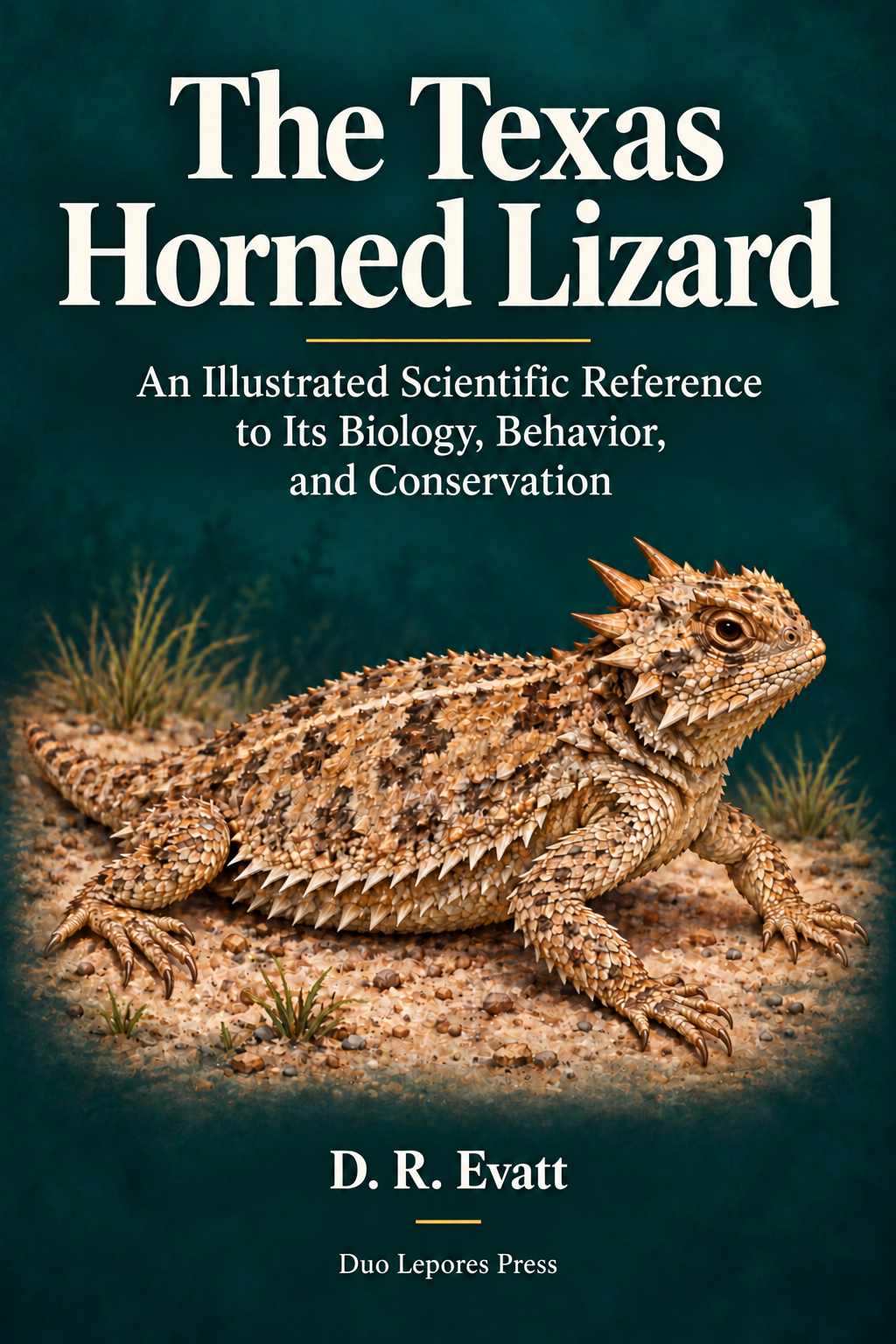
An Illustrated Scientific Reference to Its Biology, Behavior, and Conservation
A familiar backyard memory can lead to bigger questions. How does a horny toad collect rain? Why do ants matter so much? What can research tell us about its future? This illustrated reference follows those questions into the animal’s biology, behavior, and conservation.
D. R. Evatt brings together scientific findings, explanatory diagrams, and a detailed reference section for readers ready to spend more time with the real Texas horned lizard.
Coming soon
Ordering details will appear here when the book is available.